
CELEBRITY
Mamdani’s Jewish Reckoning: From Gaza Crusade to Borough Park Theater, Everyone Poses, Nobody Agrees

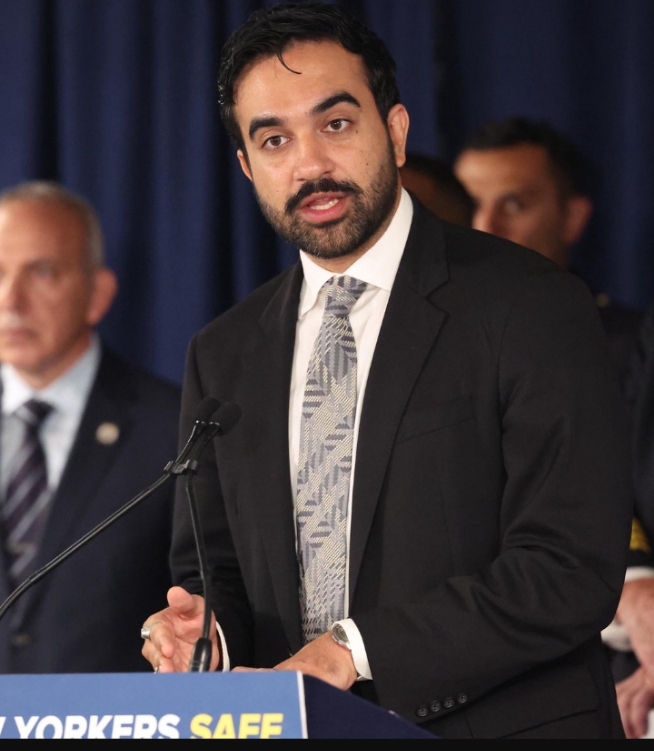
Mamdani’s Jewish Reckoning: From Gaza Politics to Borough Park—Everyone Poses, Nobody Agrees
New York City Mayor Zohran Mamdani’s visit to Borough Park this week placed him at the center of one of the city’s most complicated political fault lines: the growing divide between his progressive politics on Israel and Gaza and the concerns of Jewish New Yorkers who say their safety and identity must not become political bargaining chips.
Mamdani visited Eichler’s, a Judaica store in the heavily Orthodox Jewish neighborhood, ahead of Rosh Hashanah. He met with community members, received honey traditionally associated with the Jewish New Year and was greeted with a shofar.
But the visit was hardly a picture of political harmony.
A pro-Israel activist, Stephanie Benshimol, confronted Mamdani during the visit, accusing him of contributing to an environment in which antisemitism has become increasingly threatening. Mamdani did not respond to the accusations.
That confrontation captured the larger problem facing the mayor.
Mamdani has repeatedly said that he takes antisemitism seriously. His administration has also increased funding for hate-crime prevention and expanded the city’s Office to Combat Antisemitism. At the same time, his outspoken criticism of Israel and his politics surrounding the Gaza war have made him deeply unpopular with many pro-Israel Jewish voters and organizations.
Recent NYPD figures have added urgency to the debate. Citywide hate crimes increased during the first eight months of 2026, while anti-Jewish incidents accounted for more than half of confirmed hate crimes during that period.
Mamdani’s supporters argue that opposing the policies of the Israeli government is not the same as opposing Jewish people. His critics counter that political rhetoric surrounding Israel can have consequences far beyond foreign policy debates—especially when Jewish New Yorkers already feel vulnerable.
And Borough Park makes the contradiction impossible to ignore.
The mayor can enter a Jewish neighborhood, exchange greetings, accept a holiday gift and speak about combating antisemitism. But photographs and ceremonial gestures cannot erase the deeper political disagreement.
For some Jewish New Yorkers, the question is not whether Mamdani can visit their community. It is whether they believe his words, policies and political allies make them safer.
That is why the Borough Park visit became more than a photo opportunity.
It became a test.
Everyone can pose for the cameras.
The harder question is whether Mamdani can convince a deeply divided Jewish community that his approach to Israel, Gaza and antisemitism can coexist without compromising Jewish safety or political principle.
For now, there is no consensus.
And that may be the most revealing part of Mamdani’s Jewish reckoning: everyone can stand together for a photograph, but nobody necessarily agrees on what comes next.

Taylor Swift Officially Releases an Exclusive First Look at Her Wedding Photos With Travis Kelce After Months of Secrecy and Recent Daily Mail Leak of the Original Layout Plans and Scrapped Decisions

Taylor Swift Finally Shares the First Official Exclusive Look at Her Custom Christian Dior Wedding Looks in Newly Released Wedding Photos After Persistent Daily Mail Leaks, as a Wedding Guest’s Stunning Portrait of Taylor and Travis Kelce’s Wedding Attire Is Exclusively Revealed by the Daily Mail

Taylor Swift’s wedding dress recreated: See the stunning off-the-shoulder design, cinched waist and massive veil 👰♀️ 🔗

JUST IN: Taylor Swift and Travis Kelce Finally Reveal Their Wedding Photos After Daily Mail’s BOMBSHELL Report About Their Wedding Decor Being BURNED TO THE GROUND! Now, Fans Are Looking Closely at Every Detail!
JUST IN: Taylor Swift and Travis Kelce Finally Reveal Their Wedding Photos After Daily Mail’s BOMBSHELL Report About Their Wedding Decor Being BURNED TO THE GROUND! Now, Fans Are Looking Closely at Every Detail!

After the Long Wait, Taylor Swift Finally Reveals 7 Never-Before-Seen Photos and 1 Video From Her Star-Studded MSG Wedding to Travis Kelce! Fans Can’t Stop Rewatching the Video ⤵️

JUST IN: Taylor Swift STUNS at Kim Kardashian’s 46th Birthday Party — But ONE Unexpected Detail About Her Stunning Outfit Has Fans Zooming In and the Internet Buzzing…See Never before seen clip

Taylor Swift and Travis Kelce Spark Fresh Buzz at the Airport as They Step Out With Their Big White Dog—Fans Notice Taylor Smiling While Holding Her Stomach and Showing Off Her Wedding Ring, Prompting Questions About Their Mysterious Destination and Pregnancy Rumors…See the full moment and 15 photos ⤵️

🚨❤️🔥Taylor Swift, 36, and Husband Travis Kelce, 37, Overshare During a Steamy Makeout Session on a Private Beach at Lake Quivira in Kansas City Days Before the Chiefs vs. Seahawks Game, but Fans Are Stunned by What the Photos Reveal 😱…See full clip here ⤵️

Taylor Swift Shows Off Her Sculpted Bikini Body During a PDA-Filled Lake Como Getaway With Husband Travis Kelce as the Newlyweds Enjoy Their Romantic Era—But Her Sweet Stomach-Rubbing Moment Has Fans Buzzing With Pregnancy Speculation…See 15 beautiful photos here ⤵️

70 year old kris Jenner looks stunning in recent photos showcasing her baby bump. Isn’t she too old? Congratulations to her though
