
CELEBRITY
JUST IN: The late-night comedy world just delivered a massive blow to the political spin machine and the response was explosive! Stephen Colbert didn’t just tell jokes; he dismantled the communication tactics of Press Secretary Karoline Leavitt in a way that has Donald Trump absolutely fuming. See more ⤵️

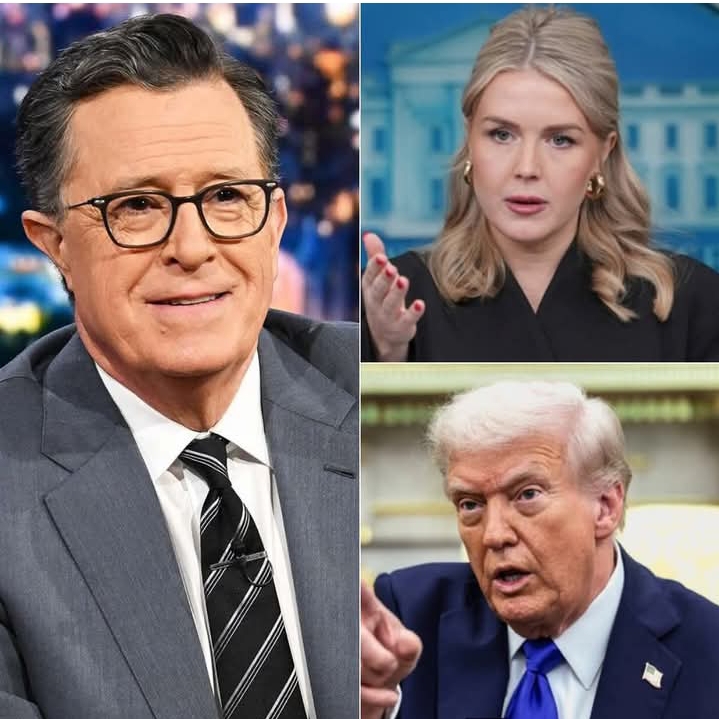
JUST IN: The late-night comedy world just delivered a massive blow to the political spin machine and the response was explosive! Stephen Colbert didn’t just tell jokes; he dismantled the communication tactics of Press Secretary Karoline Leavitt in a way that has Donald Trump absolutely fuming.
See more ⤵️
By slowing down the tape and asking one simple question—”What was the answer?”—Colbert exposed the “three-step fog” used to dodge the truth. The reaction from the former President was swift and unhinged, proving that sometimes a comedian with a timeline is more dangerous than a political rival. You won’t believe the specific clip that triggered the midnight social media meltdown. Read the full story ⤵️
**Late-Night Clash Sparks Political Ripples**
In a moment that quickly gained traction across social media and political circles, late-night host Stephen Colbert delivered a pointed monologue քննing the communication style of White House Press Secretary Karoline Leavitt—drawing sharp reactions from supporters and critics alike.
During his show, Colbert shifted from humor to a more analytical tone, breaking down what he described as “strategic deflection” and “message control” in recent press briefings. While the segment included the usual comedic flair, much of it focused on highlighting perceived inconsistencies and rhetorical tactics used in official responses to media questions.
The monologue didn’t go unnoticed. Within hours, clips circulated widely online, with commentators debating whether Colbert had crossed from satire into political commentary—or simply done what late-night hosts have increasingly become known for in a polarized media landscape.
Sources close to former President Donald Trump indicated frustration over the segment, viewing it as part of a broader pattern of media figures shaping public perception through entertainment platforms. Meanwhile, supporters of Colbert praised the segment as a sharp and necessary critique of political messaging.
The episode underscores a continuing trend: late-night television is no longer just about laughs. It has evolved into a space where politics, media strategy, and public opinion intersect—often with significant impact.
As reactions continue to pour in, one thing is clear: the boundary between comedy and political discourse is thinner than ever, and moments like this are only intensifying the conversation.