
CELEBRITY
Fed’s Kashkari Says U.S. Inflation Is Still Too High Across the Economy

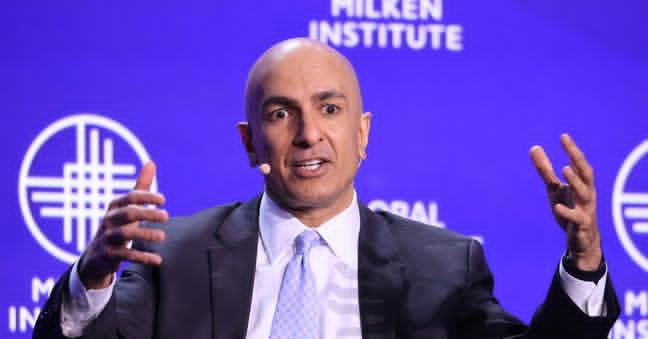
Minneapolis Federal Reserve President Neel Kashkari said Sunday that inflation remains too high across the U.S. economy, arguing that the problem extends well beyond rising oil prices.
Speaking to Fox News’ Sunday Morning Futures, Kashkari said that even after excluding volatile energy and food prices, underlying inflation remains above the Federal Reserve’s desired level.
The comments come after the Federal Reserve recently raised its benchmark interest rate by a quarter percentage point to a range of 3.75% to 4.00%. Kashkari supported that decision. According to projections released after the meeting, all but two Fed policymakers expect at least one additional quarter-point rate increase before the end of 2026.
Oil prices add to inflation concerns
Oil prices have surged amid escalating conflict involving the United States and Iran and disruptions around the Strait of Hormuz. The region is critical to global energy shipments, raising concerns that higher energy costs could feed into prices for transportation, goods and services.
Kashkari stressed, however, that the Fed cannot directly control geopolitical disruptions or reopen shipping routes. Instead, its monetary-policy tools are aimed at broader inflation pressures throughout the economy.
Services remain a concern
Kashkari pointed specifically to inflation in the services sector, saying price pressures remain widespread even when energy and food are removed from the calculation.
His comments echo concerns from Fed Chairman Kevin Warsh, who said after the latest policy meeting that too many categories of prices were still increasing at rates above 3%. Warsh estimated that the inflation measure closely watched by the Fed could have been around 3.6% in August, although the official figure had not yet been released at the time of his comments.
The Federal Reserve’s longer-term inflation target remains 2%, meaning policymakers still have work to do to bring price growth down.
U.S. economy remains resilient
Despite inflation, tariffs, trade tensions and conflicts overseas, Kashkari said the U.S. economy has continued to grow at a solid pace. He also pointed to signs of improving productivity.
His hope is that as geopolitical conflicts ease, economic growth and improving productivity could help inflation gradually decline without requiring prolonged restrictive monetary policy.
What it could mean for Americans
Persistent inflation could keep pressure on household budgets, particularly if energy prices remain elevated. It could also influence the Federal Reserve’s decisions on interest rates, affecting borrowing costs for mortgages, credit cards, businesses and other loans.
For now, Fed officials are balancing two competing concerns: bringing inflation back toward 2% while avoiding unnecessary damage to economic growth.
The key question is whether inflation will cool on its own — or whether the Fed will need to keep interest rates higher for longer.

zendaya spotted spending time with a mystery man after a short holiday in california

Meghan Markle has been spotted with a mysterious man, Could this be a sign that she has finally moved on from Prince Harry?

Meghan Markle Had One “Major Condition” for Visiting the U.K. With Prince Harry Before They Moved Back.

Prince Harry, 42, Spotted at a Glamorous NYC Hotel with a Mysterious 31-Year-Old Woman Without His Wife Meghan Markle, 45, as His Secret New York Trip Raises Eyebrows Just Days After the Couple Moved into Their New UK Home, But One Unexpected Detail Has Everyone Talking…

Prince Harry Spotted Sharing an Intimate Romantic Moment with Meghan Markle During a Private UK Outing, But One Unexpected Detail About Meghan’s Appearance Has Royal Watchers Asking Questions.

🚨 ROYAL EARTHQUAKE: Prince Harry & Meghan Reportedly Want to Abandon the Windsor Name FOREVER and Take Princess Diana’s Spencer Surname — They’ve Already Approached Her Brother! Is This Their Biggest Break From the Royal Family Yet? Here’s What We Know…

🚨 Prince Harry FURIOUS? William and George’s Football Photos Have Reignited the Royal Family Drama! Harry and Archie Deserve Moments Like These Too… See Why the Duke of Sussex Is Reportedly Struggling to Move On and What He May Never Forgive!

Michelle Obama, 62, spotted posing for a new picture with her two daughters, Malia and Sasha without husband Barrack Obama, and showing off a noticeable baby bump, but another shocking reveal raises bigger questions

Taylor Swift and Husband Travis Kelce, Alongside Jason Kelce, Patrick and Brittany Mahomes, at Jason’s 39th Birthday Bash Hosted by Taylor at 1587 Prime Steakhouse, With Sweet Photos and Clips Featuring Her New Song Dedicated to Jason

Kylie and Kendall Jenner sisters kissed each other lip to lip under the influence of alcohol, before spending the night together in the same room…

BREAKING: White House Doctor BREAKS SILENCE on a TERRIBLE Diagnosis About Trump’s Health After He Recently Fainted After Crushing 2026 US Midterm Election Defeat, Revealing a Shocking Link to Photos of Band-Aids on Trump’s Hand – And Also Reveals the Real Reason He Has Been Uncontrollably Falling Asleep During Meetings… It Is Really a Terrible Diagnosis, and the Doctor Just Exposed It…
