
CELEBRITY
New Zealand Calls for Stronger U.S. Role in Pacific as Regional Tensions Grow

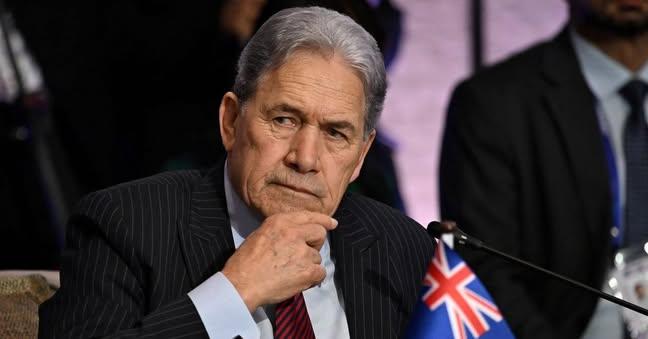
New Zealand Foreign Minister Winston Peters has called for a stronger and more active U.S. presence in the Pacific, warning that the region is facing a more uncertain and increasingly unsettled security environment.
Speaking in a major foreign-policy address on Monday ahead of New Zealand’s November 7 election, Peters said the United States has an important role to play in maintaining regional security and supporting Pacific nations.
> “The United States is a Pacific power,” Peters said, arguing that Washington should remain engaged in the region to support prosperity and security.
Peters pointed to several developments that he said were contributing to growing concern, including missile tests carried out without adequate notice, increasingly far-reaching naval exercises and the expansion of organized transnational crime affecting Pacific countries.
Although he did not directly name China in his speech, Peters has previously criticized Beijing over its test launch of an intercontinental ballistic missile into the South Pacific. China has described that launch as part of routine military training and said it was not aimed at any particular country or target.
U.S. urged to help Pacific nations
Peters also highlighted the threat posed by drug trafficking across the Pacific, saying Washington could help island nations strengthen their ability to combat organized crime.
He pointed to recent U.S. announcements in Palau that included $150 million in support for Pacific Island nations, saying New Zealand welcomed signs that Washington was responding to concerns raised by regional partners.
New Zealand has also been seeking to strengthen its own position in the Pacific through development assistance, defence cooperation and diplomatic engagement, while encouraging larger powers to pay closer attention to the priorities of Pacific island governments.
Wider geopolitical competition
Peters’ comments come as geopolitical competition in the Pacific intensifies, with China expanding its diplomatic, economic and security relationships across the region.
The New Zealand government has increasingly spoken more directly about these developments, while still emphasizing the importance of working with Pacific nations and respecting their priorities.
Peters also warned that the wider global environment remains unstable, pointing to economic disruption, uncertainty and the return of protectionist trade policies.
The veteran politician is seeking another term as leader of New Zealand First, a junior partner in New Zealand’s governing coalition.
**The bigger question now is how deeply the United States will engage in the Pacific—and how that involvement could shape the region’s future security and economic relationships.**

Taylor Swift may have found her latest role, and it has nothing to do with a microphone or a recording studio. Insiders are claiming that the pop star is determined to find Tom Cruise his next romantic partner — and there’s a reason why.

“HER FINAL WISH WAS JUST TO HOLD HIS HAND!” PATRICK MAHOMES SECRETLY VISITS TERMINGALLY ILL 7-YEAR-OLD FAN IN HOSPITAL! What emotional, unscripted gesture did No. 15 make by her bedside that left family and doctors in tears? Read the heart-wrenching full story now!
Taylor Swift, Husband Travis Kelce, His Mom Donna Kelce, Scott and Andrea Swift Spotted at 1587 Prime Steakhouse Celebrating the Chiefs’ Stunning 33-30 Win Over the Colts – Taylor Steals the Spotlight Across the Restaurant With a Special Celebratory Kiss for Travis, but What Has Fans Going Crazy Is Her Proudly Showing Off Her $1 Million Diamond Ring and Yelling “That’s My Husband” Again Before Taking Over the Dance Floor With Hilarious Dance Moves – See the Full Never-Before-Seen Clip

Taylor Swift Breaks Chiefs and NFL Protocol After Bursting Into the Chiefs Locker Room Following the Chiefs’ Thrilling 33-30 Overtime Win Over the Indianapolis Colts to Celebrate the Team and Boost Their Morale With a Sweet Speech – But Her Hilarious Recreation of Coach Andy Reid’s Famous Celebratory “Dab” Dance Moves Sends Teammates and Staff Crazy, and Fans Can’t Stop Talking About It – See the Never-Before-Seen Clip

“Taylor Swift Breaks NFL Protocol Again and Rushes to the Field to Celebrate, Hug, and Kiss Husband Travis Kelce After Chiefs’ Stunning 33–30 Overtime Win Over the Colts – Mom Andrea Swift Seen Chasing Her Daughter to Caution Her as Overexcited Taylor Couldn’t Hold Herself Back, While Patrick Mahomes Couldn’t Hold Back His Laughter… See the Full Never-Before-Seen Clip and Photos…

Travis Kelce’s cheeky reaction to Taylor Swift’s “Law & Order SVU”-themed Emmys skit proves that he’s down bad for his wife, who was nominated for three awards at the Sept. 14 event.

Taylor Swift Just Had The Sweetest Reaction To Travis Kelce’s Touchdown

😍 “EVERYONE SAW THE GAMES… BUT THESE MOMENTS TOLD A DIFFERENT STORY” — Taylor Swift & Travis Kelce’s rare sports appearances reveal the unforgettable memories fans can’t stop talking about. The world watched them cheer from the stands, celebrate victories, and share special moments in public… But these five photos capture a side of Taylor Swift and Travis Kelce that many fans may have missed. And the small details hidden in these moments are what have everyone looking back again… 👀 👇 See the 5 unforgettable photos here

Travis Kelce Hospital Photo Claim Sparks Questions as Chiefs Star Delivers Huge Performance

Taylor Swift Turns Heads in $40 Chiefs Tank Top While Cheering on Travis Kelce

Travis Kelce Turns Heads at Arrowhead in Louis Vuitton
