
CELEBRITY
No one saw it coming — what started as a routine hearing suddenly exploded into chaos when Cory Booker went off-script and cornered Pam Bondi over the Jeffrey Epstein case. The tension snapped in seconds… but the real shock hit when Booker leaned in, dropped a bombshell detail, and Bondi’s stunned reaction said more than words ever could. Because in that moment, the room didn’t just fall silent — it realized something wasn’t adding up.

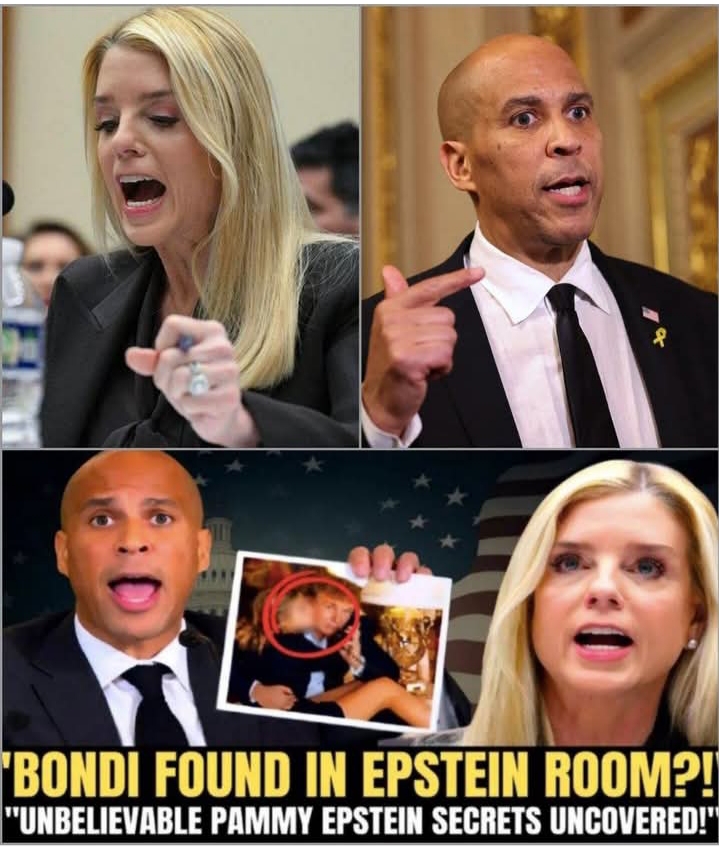
No one saw it coming — what started as a routine hearing suddenly exploded into chaos when Cory Booker went off-script and cornered Pam Bondi over the Jeffrey Epstein case. The tension snapped in seconds… but the real shock hit when Booker leaned in, dropped a bombshell detail, and Bondi’s stunned reaction said more than words ever could.
Because in that moment, the room didn’t just fall silent — it realized something wasn’t adding up.
Full story and latest updates below 👇
The atmosphere inside the hearing room was, at first, unremarkable — another procedural session expected to pass without incident. Lawmakers shuffled papers, aides whispered quietly, and the steady rhythm of formal questioning carried on. But within minutes, the tone shifted dramatically.
What began as routine questioning by Cory Booker took an unexpected turn when he departed from prepared remarks and began pressing Pam Bondi on her past connections to matters surrounding Jeffrey Epstein.
Observers in the room noted the sudden change in cadence. Booker’s questions became sharper, more pointed, and less predictable. Bondi, initially composed, appeared momentarily caught off guard as the exchange intensified. The usual back-and-forth of political hearings gave way to a palpable tension — the kind that signals something unscripted is unfolding.
At the center of the moment was Booker’s insistence on clarity. While he did not present new verified evidence during the exchange, his line of questioning suggested inconsistencies he believed warranted closer scrutiny. It was less about a single revelation and more about how the questions were framed — direct, persistent, and difficult to sidestep.
Bondi’s response, measured but visibly strained, reflected the pressure of the moment. She reiterated previously stated positions, emphasizing that her actions had been appropriate and within the bounds of the law. Still, her reaction — a pause here, a tightened expression there — did not go unnoticed by those watching closely.
For a brief stretch, the room fell unusually quiet. Staffers stopped typing. Lawmakers leaned forward. Even seasoned observers of congressional proceedings sensed that the exchange had cut through the routine.
In the aftermath, there was no immediate resolution — no definitive conclusion drawn in that instant. But the encounter underscored a broader reality: hearings are not always predictable, and moments of unscripted confrontation can reshape how issues are perceived, even without introducing new facts.
What lingered most was not a single statement, but the tension itself — a reminder that in high-stakes public scrutiny, how something is said can resonate just as strongly as what is actually proven.

🚨🚨BREAKING!! Mexican president claims that Trump is not…[See more Comments]

🚨 SPOTLIGHT: Taylor Swift and Travis Kelce are facing bizarre rumors just ahead of the Chiefs’ season, drawing fresh attention to the couple as football returns to the spotlight…..

💔HEARTBREAK IN THE KINGDOM: Kansas City Chiefs Organization in Deep Mourning After 35-Year-Old Staff Member Murdered While Trying to Break Up Bar Fight…😱

🎵“A LOVE BEYOND THE SPOTLIGHT”: Travis Kelce and Taylor Swift Unveil “Shadows in the Light,” a Raw and Cinematic Duet….

😭🔥BREAKING 🚨💥plane with more than 244 onboard just crash… 𝗦𝗲𝗲 𝗺𝗼𝗿𝗲

🔥JUST IN: Iran Stuns The World And Announces… See more

🚨BREAKING NEWS! : Shock in D.C.: President Donald Trump… 𝗦𝗲𝗲 𝗺𝗼𝗿𝗲

😭🚨Jennifer Lopez’s son is already starting… See more

🚨 BREAKING: Travis Kelce & Taylor Swift LEAVE THE INTERNET IN SHOCK WITH SUDDEN LIFE-CHANGING REVEAL!

Age vs. Off-Field Fame: ESPN’s Mina Kimes Weighs In on Travis Kelce’s Decline… Full story via 🔗in comments. 👇

🚨 SPOTLIGHT: Taylor Swift and Travis Kelce are facing bizarre rumors just ahead of the Chiefs’ season, drawing fresh attention to the couple as football returns to the spotlight. 👇👇👇
