
NEWS
Travis Kelce Comforts Crying Wife Taylor Swift After Fans Boo Her and Shout “We Don’t Want You Here Again” as They Leave the Arena Following the Knicks’ 100–106 Loss to the 76ers

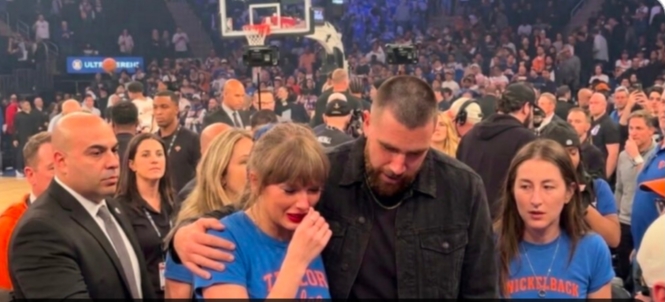
A dramatic celebrity headline has put Taylor Swift and Travis Kelce in the spotlight following the New York Knicks’ narrow defeat to the Philadelphia 76ers. The game ended with Philadelphia winning 106–100, leaving Knicks supporters disappointed after a competitive contest.
But beyond the basketball result, an unverified online claim alleges that Taylor faced hostile remarks from fans as she and Travis left the arena. The headline further suggests that Travis comforted his wife while she cried.
Those are emotionally charged claims, and they deserve careful examination. No reliable, independently verified evidence has been established here to confirm that the alleged confrontation happened or that Taylor was crying.
🏀 The Knicks Suffer a Painful Six-Point Defeat
The Knicks and 76ers met on October 20, 2026, in a matchup that ended with Philadelphia taking a 106–100 victory.
For New York supporters, a six-point defeat can be particularly frustrating because the game remained competitive. Every missed opportunity, defensive breakdown, and late possession can become a subject of debate when a team falls short.
Philadelphia, meanwhile, left with the win after outscoring New York over the course of the contest.
Although the result provides the sporting context for the viral headline, the final score alone does not establish what happened among spectators outside the arena or whether Taylor and Travis encountered hostile fans.
❤️ Travis and Taylor: A Couple Constantly in the Spotlight
Taylor Swift and Travis Kelce attract enormous public attention because their relationship bridges the worlds of music and professional football.
Taylor’s career has made her one of the most recognizable entertainers in the world, while Travis has become a prominent figure through his achievements with the Kansas City Chiefs.
Their public appearances frequently generate discussion, whether they involve a sporting event, a concert, or an evening out. That attention can also lead to rumors that spread before the underlying details have been confirmed.
The latest headline uses the image of Travis supporting Taylor during an upsetting moment. It is an emotionally powerful scenario, but the specific interaction described has not been verified.
One of the most striking elements of the headline is the alleged chant, “We don’t want you here again.”
If such remarks were documented, they would understandably become part of the conversation about celebrity treatment at sporting events. However, there is no independently verified account available here establishing that spectators directed those words at Taylor.
It is also unclear from the claim where the alleged incident occurred, who supposedly witnessed it, or whether an authentic video captured the exchange.
Without that evidence, the quotation should not be treated as a confirmed statement from Knicks supporters. It would be equally unfair to attribute the alleged behavior to the entire fan base based on an unverified headline.
The headline also portrays Travis as comforting Taylor after the alleged encounter.
The image of a partner offering reassurance during a difficult moment is one that many readers can relate to. It is easy to see why such a story would attract attention, particularly among fans who follow the couple closely.
But the claim that Taylor was crying, and that Travis responded in the specific way described, remains unconfirmed.
No direct statement from either Taylor or Travis has been established here to support the account. Without credible photographs, verified footage, or reliable eyewitness reporting, the details should remain allegations rather than facts.
🔥 Why the Story Is Spreading
Celebrity news often gains momentum when a sporting result is combined with an emotional personal narrative.
In this case, the Knicks’ defeat provides a clear event around which the story is framed, while the alleged confrontation introduces a dramatic human element. The suggestion that Travis supported Taylor adds another layer that may encourage fans to share and discuss the headline.
However, a compelling narrative is not necessarily an accurate one. Social media posts can omit important context, misidentify the people involved, or attach dramatic captions to footage that does not support the claims being made.
Readers should therefore seek the original source and check whether credible reporting confirms the alleged incident before sharing it as breaking news.
Public figures are often scrutinized wherever they go, but being famous does not mean that someone must accept personal insults or unwanted attention.
At the same time, unverified reports of public confrontations can unfairly damage reputations and create unnecessary hostility toward people who may not have been involved.
The most responsible approach is to establish what actually happened before drawing conclusions about Taylor, Travis, or the fans mentioned in the headline.

This has just put all Taylor Swift rumours to bed, Taylor and Travis heading out after attending a charity event in Beverly Hills, See Obvious photos and 3mins interview video of both Travis and Taylor

Queen Camilla’s ex-husband, 84, secretly finds love with TV host 😳 Better sit down, because you might recognize her (For Full Information, Check Link In Comment👇🏻👇🏻

5 minutes ago, King Charles made a SAD Announcement! Prince Harry has…. (For Full Information, Check Link In Comment👇🏻👇🏻)

“So disgusting”: Taylor Swift and Travis Kelce beach image sparks heated fan war and viral body image debate across social media

“So disgusting”: Taylor Swift and Travis Kelce beach image sparks heated fan war and viral body image debate across social media
🚨💍 Kim Kardashain and Lewis Hamilton are officially married after photos from their private wedding in the Bahamas were leaked. The intimate ceremony was attended by only close friends and family.❤️ But something unbelievable happened happened during the ceremony that has kept fans buzzing!

🔥👀 SYDNEY SWEENEY AND FERRAN TORRES IGNITE SOCIAL MEDIA AFTER A HEAD-TURNING BOAT SIGHTING IN FRANCE!

Taylor and Travis are going to be the best parents ever ❤️ See lovely photos & videos here…👇

🚨💔 ROYAL FAMILY IN TEARS! Prince William Breaks Down as He Reveals Heartbreaking News About Their Child The Palace Is Left in Shock Kate Bursts Into Tears, Saying “Our Child Has…

🚨❤️ JUST IN: Taylor Swift’s Absence at Travis Kelce’s Chiefs Game Sparks Major Questions — Now, a Vacation Photo Shared by Travis Has Fans Suspecting a Possible Pregnancy, and Everyone Is Zooming In on One Detail

Taylor Swift Sparks Fresh Buzz After Showing Off Her Stunning One-Month Pregnancy Glow in a Tiny Green Bikini While Soaking Up the Sun in Corfu and Sharing Sweet, Passionate Kisses With Husband Travis Kelce During a Dreamy Romantic Getaway Ahead of the NFL’s Game…see just released wedding photos and videos
