
NEWS
🔥🚨 PAUL FINEBAUM WENT TOO FAR — THEN NICK SABAN SAID 10 WORDS ABOUT KANSAS CITY’S 31–10 WIN THAT LEFT THE ESPN STUDIO DEAD SILENT 👀 WHAT SABAN SAID NEXT HAS CHIEFS KINGDOM ERUPTING. FULL STORY BELOW 👇👇👇

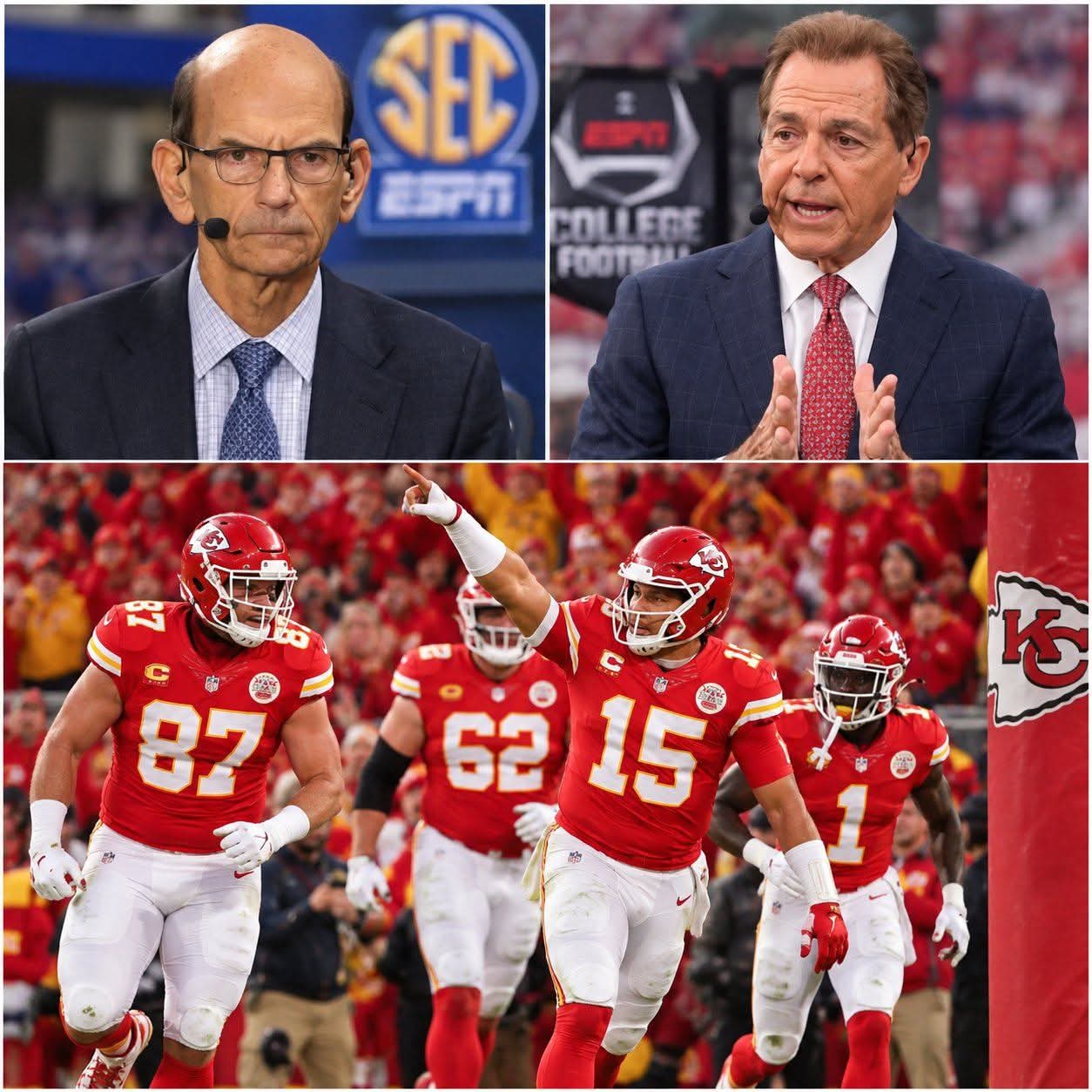
What was supposed to be a routine postgame breakdown quickly developed into a fiery, high-stakes argument over just how impressive Kansas City’s performance really was.
The Chiefs had walked away with a 21-point victory over their AFC West rival, but Finebaum wasn’t prepared to join the celebration.
Instead, he challenged the narrative surrounding Kansas City’s performance, arguing that the final score made the victory appear far more dominant than the game itself.
Known for provocative opinions and an aggressive debating style, Finebaum didn’t hold back as he dissected Kansas City’s performance in front of a national television audience.
That doesn’t suddenly make this some championship-level masterpiece.
The Chiefs had opportunities where they could have lost control of this game.
Denver didn’t lose only because Kansas City was vastly superior. Denver hurt itself when it mattered most.”
Finebaum leaned back in his chair, appearing completely confident in his assessment.
Then came another shot.
“You can preach championship standard and execution all you want, but that 31–10 scoreboard makes Kansas City look far more dominant than they actually were.
The Chiefs got plenty of help from Denver — plain and simple.”
The moment those words left his mouth, the atmosphere inside the imagined studio confrontation completely changed.
Louis Riddick exchanged a glance with Scott Van Pelt.
Finebaum had made his argument.
Now everyone was waiting for Nick Saban.
Saban had remained silent throughout much of the criticism.
He looked down toward his notes.
Then he slowly leaned toward the microphone.
When he turned toward Finebaum, his expression carried the familiar intensity football fans had seen countless times throughout his legendary coaching career.
His voice remained calm.
But his message was anything but soft.
Paul, you’ve talked about football for a long time, but you’re ignoring the reality of what it takes to win games at this level,” Saban began.
“You can criticize execution. You can identify mistakes. That’s part of evaluating football.
But when you dismiss a 31–10 victory over a divisional opponent as if the winning team had nothing to do with it, you’re not telling the entire story.”
The studio went quiet.
Saban continued.
“Denver knows Kansas City.
They know the personnel. They study the tendencies.
They understand what the Chiefs want to do because these teams see each other every year.
Divisional football is different.”
His eyes remained fixed across the desk.
“You don’t apologize for beating a divisional opponent by 21 points.
You evaluate what you did well, you correct what wasn’t good enough, and then you move forward.”
Finebaum appeared ready to respond.
Saban kept going.
“People want every good football team to look perfect.
That’s not how this works.
There are no perfect games.”
The tension continued building.
Kansas City had scored 31 points.
Denver had scored 10.
To Saban, the hypothetical argument was simple: mistakes made by the losing team don’t automatically erase the execution of the team that capitalizes on them.
Saban then pushed directly against Finebaum’s argument that Denver had simply handed Kansas City the game.
“You keep saying Denver made mistakes like Kansas City had nothing to do with what happened,” Saban said.
“Good football teams force opponents into uncomfortable situations.
And when an opponent gives you an opportunity, good teams make them pay for it.”
That was the part of Finebaum’s analysis Saban refused to accept.
Football games are rarely decided because one team performs flawlessly.
Mistakes happen.
Assignments are missed.
Drives stall.
Momentum changes.
The difference between winning and losing often comes down to which team responds better when those moments arrive.
Kansas City responded.

“Taylor Swift and Travis Kelce Spotted Exiting Arrowhead Stadium Hand in Hand After Chiefs’ 31–10 Win Over Broncos, With Taylor Waving to Fans During Their First NFL Game as Newlyweds “

‘This Man’s Brain Is a Potato’: Trump Roasted After Reviving His Strangest Feud

‘Stone Cold Loser!’ Trump Lashes Out at Karl Rove After Shock Break With Republicans

🚨 HOT NEWS: TRAVIS KELCE REVEALS A RARE GLIMPSE INTO HIS “BEST NIGHT OF MY LIFE” AFTER MARRYING TAYLOR SWIFT… BUT WHAT HE SAID ABOUT THE JOURNEY AFTER THAT LEFT FANS EMOTIONAL AND THE INTERNET TALKING 👀🔥

Fed-Up Taylor Swift Caught On Live TV Snapping At ESPN Cameraman For Showing Her Again During MNF [VIDEO]

🔥🚨 PAUL FINEBAUM WENT TOO FAR — THEN NICK SABAN SAID 10 WORDS ABOUT KANSAS CITY’S 31–10 WIN THAT LEFT THE ESPN STUDIO DEAD SILENT 👀 WHAT SABAN SAID NEXT HAS CHIEFS KINGDOM ERUPTING. FULL STORY BELOW 👇👇👇

Patrick Mahomes’ kids share sweet messages for their dad ahead of his return … Read more

What Trump Just Doesn’t Get About America’s Long, Sordid History of Racism in Higher Education

“Taylor Swift is sick of being on camera” “Attention seeking”: NFL fans react to lip-readers’ rendition of Travis Kelce’s wife

Taylor Swift Jumps for Joy with Jason Kelce After Husband Travis Kelce Completes Massive 59-Yard Run
😍“TAYLOR, WHAT ARE YOU DOING?” — The entire stadium was taken by surprise when Taylor Swift broke with standard celebration protocol to run straight to Travis Kelce following the Chiefs’ victory. In a rare move, Taylor Swift defied NFL rules by rushing onto the field and into the arms of her boyfriend, Travis Kelce, after the Chiefs’ dominant 31-10 win over the Broncos in the NFL season opener — Watch the full, rare two-minute clip here. 👇👇👇
