
NEWS
🚨 TAYLOR SWIFT CONFRONTS A FAN FOR FILMING HER AT TRAVIS KELCE’S NFL GAME?! 👀🔥 The Unexpected Moment Has Fans Talking, With Swifties Debating Privacy, Celebrity Boundaries, and What Really Happened! Was Taylor Simply Protecting Her Personal Space? CLICK NOW TO GET THE FULL STORY AND SEE WHY THIS MOMENT HAS EVERYONE TALKING! 👇

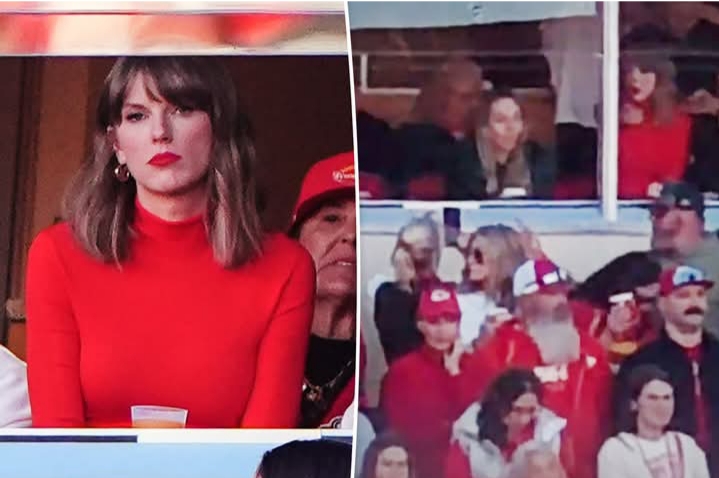
A viral claim involving Taylor Swift, a fan’s camera, and an NFL game featuring Travis Kelce has sparked questions about celebrity privacy, fan behavior, and the challenges of being one of the most recognizable stars in the world. But is the reported confrontation confirmed? Here’s what readers need to know.
Taylor Swift’s appearances at NFL games have become major talking points, attracting attention from football fans, music lovers, and celebrity watchers alike. Whenever the global pop superstar is spotted supporting Travis Kelce, cameras often turn toward her, and even seemingly ordinary moments can generate enormous discussion online.
Now, a headline suggesting that Swift confronted a fan for filming her during Kelce’s game is raising another question: where should the line be drawn between a celebrity’s public appearance and their right to personal space?
Although the claim has attracted attention, the specific interaction has not been independently verified for this report. Without authenticated footage or reliable reporting establishing what happened, it would be premature to conclude that Swift confronted a fan or speculate about the reason behind any alleged exchange.
Swift’s connection with Kelce has brought together two enormous audiences: Swifties and NFL supporters. Her appearances at Kansas City Chiefs games have frequently become major entertainment-news moments, with fans watching for everything from her reactions in the stands to her interactions with friends and family.
That attention also means that cameras can follow her throughout a game. Fans may want to capture a memorable sighting, while other spectators may simply be interested in the atmosphere surrounding a high-profile event.
For someone as famous as Swift, however, the constant attention can raise difficult questions about privacy. Even when a celebrity attends a public sporting event, that does not necessarily mean every personal interaction should become a viral video.
This is the central question behind the circulating headline.
At the time of writing, no independently verified evidence has been established here to confirm the alleged confrontation. The precise date, location within the stadium, identity of the fan, and details of the supposed exchange also remain unconfirmed.
Those distinctions matter. A headline, social media caption, or repost can describe an incident as dramatic without providing enough evidence to establish what actually happened.
If footage emerges, viewers should consider the original source, the surrounding context, and whether the recording shows the entire interaction rather than a brief clip. A person looking in someone’s direction or making a gesture, for example, does not automatically prove that a confrontation took place.
Until credible evidence becomes available, the claim should be treated as unverified.
Regardless of whether this particular incident occurred, the story touches on a genuine debate about public figures and personal boundaries.
Fans often feel excited when they unexpectedly see a favorite singer, actor, or athlete. Taking a photograph or recording a short video may seem harmless, especially at a large sporting event where cameras are everywhere.
But celebrities are people, too. Being recognizable does not mean someone welcomes being recorded at every moment, and a public appearance does not automatically eliminate every expectation of personal space.
The situation can become more complicated when a recording captures a private conversation, includes people who did not agree to participate, or is posted online without the context needed to understand what happened.
At the same time, not every fan who records a celebrity is acting maliciously. Some may simply be trying to preserve a memorable experience. The circumstances, the person’s behavior, and the venue’s rules all matter when evaluating an encounter.
Swifties are known for paying close attention to details surrounding the singer’s public appearances. A claim involving Swift and a fan could naturally prompt questions, discussions, and competing interpretations.
Some fans might emphasize that celebrities deserve boundaries, even when attending highly publicized events. Others might ask to see the original footage before deciding whether anyone behaved inappropriately.
Still others may point out that social media can transform an ordinary exchange into an apparent controversy when a short clip circulates without context.
Without verified evidence of this particular encounter, however, it would be unfair to claim that Swift’s fanbase has reached a particular conclusion or that the singer has publicly explained her position.
Kelce’s football career and Swift’s worldwide fame have helped make their public appearances a recurring subject of entertainment coverage. Their connection has also demonstrated how quickly sports moments can cross over into celebrity news.
For the NFL, attention from entertainment audiences can bring additional interest to games. But that attention can also shift the spotlight away from the action on the field and toward the people watching from the stands.
When a story about a celebrity interaction begins circulating, the most responsible approach is to distinguish verified information from speculation. Neither a famous name nor a dramatic headline is a substitute for evidence.

❤️ TAYLOR SWIFT AND BRITTANY MAHOMES REUNITE FOR A STAR-STUDDED CHIEFS NIGHT OUT! Joined by Travis Kelce and Patrick Mahomes, the reported celebration for teammate Kenneth Walker III’s dog has fans buzzing! The WAGs’ reunion is stealing attention, and everyone wants to see who showed up and what happened! 👀🔥 CLICK FOR THE DETAILS! 👇

❤️TAYLOR SWIFT AND TRAVIS KELCE SPOTTED IN A ROMANTIC LAKE COMO GETAWAY—BUT ONE DETAIL HAS FANS STUNNED! After the Chiefs’ clash with the Chargers, the couple allegedly enjoyed a relaxed, affectionate moment in Italy. Now fans are asking the same burning question about Taylor’s appearance! 👀🔥 SEE WHAT EVERYONE IS TALKING ABOUT! 👇

🚨❤️TAYLOR SWIFT AND TRAVIS KELCE SPOTTED IN A ROMANTIC LAKE COMO GETAWAY—BUT ONE DETAIL HAS FANS STUNNED! After the Chiefs’ clash with the Chargers, the couple allegedly enjoyed a relaxed, affectionate moment in Italy. Now fans are asking the same burning question about Taylor’s appearance! 👀🔥 SEE WHAT EVERYONE IS TALKING ABOUT! 👇

🔥😱 JUSTIN BIEBER COLLAPSE CLAIM SPARKS FRESH CONCERNS! A disturbing account describes the pop star seemingly sniffing something before collapsing as he prepared to eat. Social media is buzzing with questions, but speculation is not proof—and the crucial details still need verification. READ THE FULL BREAKDOWN HERE! 🚨👇

🚨👀SASHA OBAMA SPOTTED SMOKING ON THE STREET—AND FANS ARE RAISING QUESTIONS! Barack Obama’s daughter has sparked fresh online discussion after an alleged public sighting. But beyond the viral photos, supporters are asking for compassion, privacy, and respect. What do we actually know about the moment? SEE THE DETAILS HERE! 👇

😱👑 ROYAL BOMBSHELL! CAMILLA REPORTEDLY BREAKS DOWN IN TEARS AS WORRIES GROW OVER KING CHARLES! With Reports Describing the Monarch as Being in “Agony,” Fresh Questions Surround His Wellbeing and the Emotional Toll on His Wife. The Palace Has Everyone Watching Closely! 💔 CLICK TO FIND OUT MORE! ⤵️

🚨😂 TAYLOR SWIFT AND CAITLIN CLARK JUST GAVE FANS ANOTHER VIRAL MOMENT! That Back Hug Is TOO MUCH! 😭❤️ The Internet Is Already Loving Their Playful Energy, and Fans Cannot Stop Calling Caitlin “TAYDAUGHTER”! CLICK TO SEE WHY EVERYONE IS LAUGHING AND GUSHING! ⤵️

🚨🔥 TAYLOR SWIFT AND TRAVIS KELCE TAKE OVER 1587 PRIME AFTER CHIEFS’ HUGE VICTORY! Caitlin Clark Joins the Postgame Spotlight as the Celebrity-Filled Celebration Gets Fans Talking! What Happened After Kansas City’s 22–6 Win Has Everyone Curious! 👀🏈 SEE THE PHOTOS AND DETAILS HERE! ⤵️

🚨💍 1. TAYLOR SWIFT JUST LEFT FANS STUNNED WITH ONE UNEXPECTED WEDDING-RING CHANGE! The Superstar Was Spotted Wearing Her Wedding Band All Alone, Ditching Her Usual Ring Stack—and Fans Are Zooming In on Every Detail! Is This Simply a Bold New Style Move? 👀🔥 SEE THE PHOTOS EVERYONE IS TALKING ABOUT! ⤵️

Travis Kelce Stuns Alongside Wife Taylor Swift in Romantic Video Promo for “Cleveland,” the ‘Life of a Showgirl: The Encore’ Track Dedicated to Her NFL Husband

🚨 CHIEFS EMOTIONAL MOMENT: Kansas City’s 22–6 VICTORY Over the CHARGERS Was Only Part of the Story! A reported POSTGAME NATIONAL ANTHEM PERFORMANCE delivered an UNEXPECTED, HEARTFELT MOMENT that went BEYOND FOOTBALL! 🇺🇸❤️👇
