
CELEBRITY
How Trump and Xi Went From Tariff War to Trade Truce

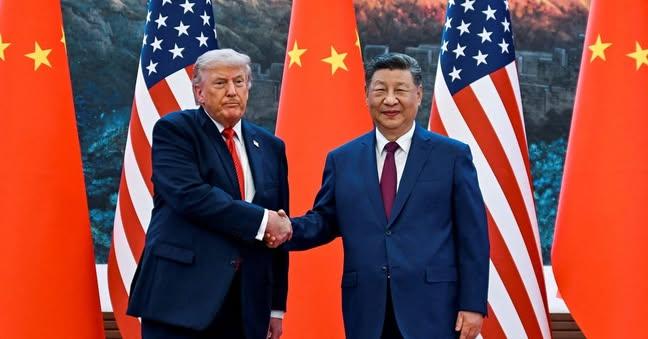
The relationship between the United States and China has gone from an intense tariff battle to a fragile trade truce, as President Donald Trump and Chinese President Xi Jinping prepare for another high-level meeting in Washington.
The two economic powers spent much of 2025 escalating tariffs and restricting key exports. But after months of negotiations, both sides began pulling back from the brink, seeking to stabilize trade and avoid another major economic confrontation.
How the trade war began
In February 2025, Trump imposed a 10% tariff on Chinese goods, citing concerns including fentanyl and immigration. China responded with tariffs on American coal, liquefied natural gas, crude oil and automobiles, while also restricting exports of several metals important to defense and clean-energy industries.
The confrontation intensified in March and April. Trump’s so-called “Liberation Day” tariffs pushed U.S. duties on Chinese goods sharply higher, while Beijing retaliated with its own increases. At the peak of the escalation, tariffs on both sides reached as high as 125%. China also tightened controls on rare-earth exports.
The first pause
By May 2025, Washington and Beijing began looking for a way to stop the escalation.
Negotiations in Geneva produced a 90-day pause. U.S. tariffs on Chinese goods were reduced from 145% to 30%, while China’s tariffs on U.S. goods fell from 125% to 10%.
The pause was later extended, giving both governments more time to negotiate a broader arrangement.
From confrontation to a truce
Tensions returned later in 2025, particularly over China’s restrictions on rare-earth exports.
But in October, Trump and Xi reached a trade truce following talks in South Korea. Trump agreed to reduce some tariffs, while Beijing pledged measures involving fentanyl precursor chemicals, purchases of U.S. agricultural products and rare-earth export restrictions.
The agreement did not resolve every dispute, but it helped prevent another major tariff escalation.
A new phase in 2026
The relationship entered another phase in 2026.
After the U.S. Supreme Court struck down Trump’s emergency tariffs in February, the administration introduced a temporary 10% global tariff under a different legal authority.
In May, Trump visited Beijing for a summit with Xi. The two governments announced plans for new trade and investment mechanisms, while China agreed to purchases involving Boeing aircraft and U.S. agricultural products.
Now, attention is turning to Trump’s planned September 24 meeting with Xi at the White House.
What comes next?
The current truce remains fragile and is due to expire in November. U.S. and Chinese officials have been holding preparatory talks covering tariffs, trade, critical minerals and artificial intelligence.
Officials are also discussing possible tariff reductions on selected non-sensitive goods. Reuters reports that Washington and Beijing have discussed a broader framework involving roughly $30 billion in tariff cuts on each side, although the discussions are not yet final.
The upcoming Trump-Xi meeting is therefore less about declaring an end to the trade war and more about determining whether the current period of relative stability can continue.
After reaching the highest levels of tariff confrontation in decades, Washington and Beijing now appear focused on managing their differences without allowing the relationship to spiral back into another full-scale trade war.

Trump warned of ‘painful attacks’ should he follow through on violent threat, report says

Germany’s Regional Elections Send a Warning to Merz as AfD Gains Ground

Leon Black Faces Congressional Contempt Over Jeffrey Epstein Investigation

Charles Spencer Stands by Claim About King Charles After Princess Diana’s Funeral

New Zealand Calls for Stronger U.S. Role in Pacific as Regional Tensions Grow

Xi Heads to Trump Summit as China’s Trade Engine Keeps Roaring

How Trump and Xi Went From Tariff War to Trade Truce

Macron Backs Canada’s Push for Closer EU Ties as Ottawa Turns Toward Europe

Red-State Voters Show Growing Frustration With Trump Ahead of Midterms

Trump’s “AI Czar” Comedy: Call It a Hoax, Then Beg for Guardrails

🚧“THEY WANTED AN 8-FOOT WALL… THE VILLAGE SAID NO” — The entire lakeside town froze when Taylor Swift and Travis Kelce’s plan for a high privacy fence around their $5.35 million Bratenahl mansion was shot down by village planners. In a rare public snag for the newlyweds, the Architectural Review Board cited code that caps lakefront fences at 2½ feet unless they’re mostly see-through — forcing the couple to settle for a shorter barrier that doesn’t even enclose the whole property. Neighbors say a spoken alarm now warns anyone who gets too close. Watch the full, surprising Ohio mansion security battle here. 👇👇👇
